
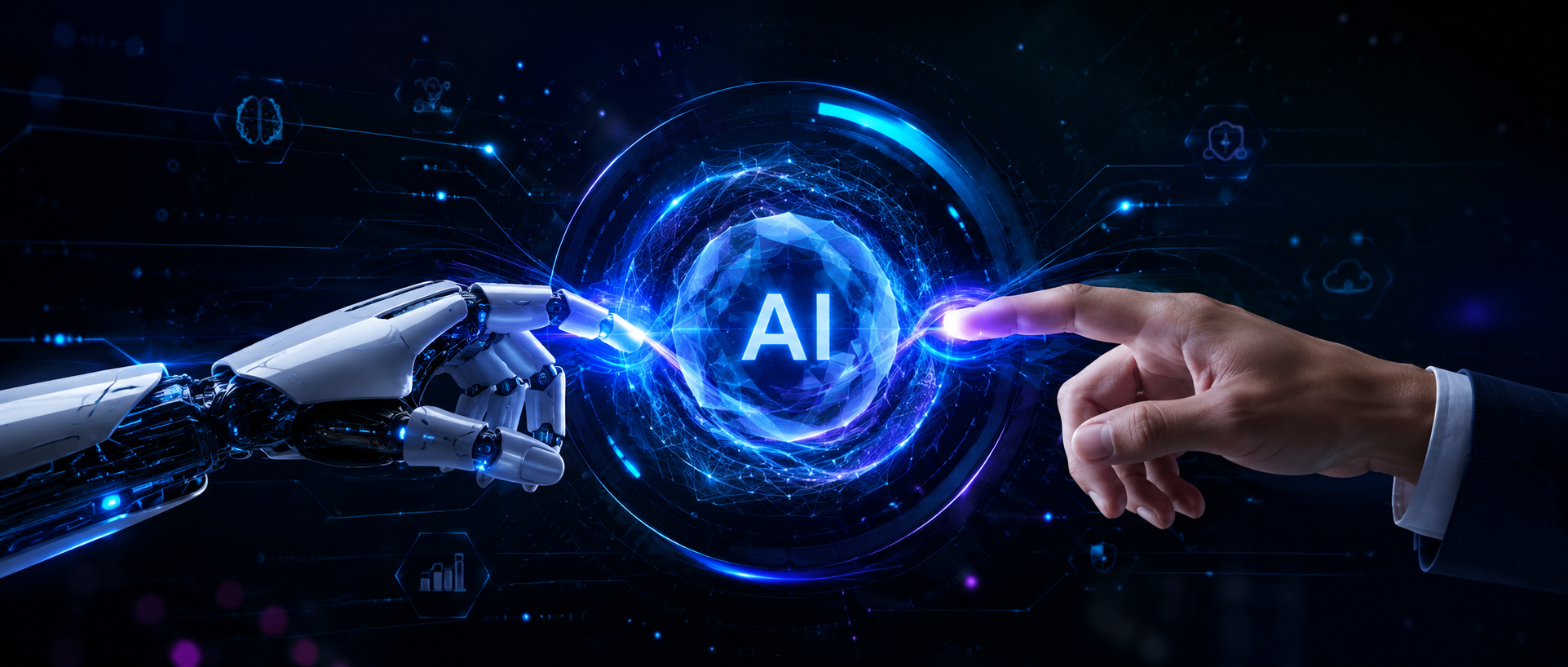
Artificial Intelligence (AI) has been widely implemented and has become a groundbreaking innovation in many aspects of everyday human life. In certain types of work, AI is considered faster and more efficient in helping complete tasks. One notable example is ChatGPT, which achieved an exceptionally high number of users within a very short period.
You may have also noticed that more and more jobs traditionally performed by humans are now being replaced by machines and automated systems. While AI can help increase productivity and improve services, some people believe that its growing presence could have negative implications for the future workforce.
About AI
The concept of AI was first introduced by computer scientist Professor John McCarthy. The intelligence demonstrated by AI systems is the result of combining algorithms with various technologies, including deep learning, machine learning, and natural language processing (NLP).
Artificial Intelligence is the simulation of human intelligence through technology. Although AI has made significant progress, it is still not as intelligent as humans and requires human oversight and input in many situations. Nevertheless, AI has become an invaluable tool for helping people accomplish a wide range of tasks.
Types of AI Based on Capability
Almost everyone today has experienced the advantages offered by AI technology. In fact, many smartphones already incorporate AI features. Based on capability, AI can generally be classified into two main types:
Strong AI
Strong AI refers to artificial intelligence systems that possess intellectual abilities similar to those of humans. These capabilities include problem-solving, language understanding, and decision-making based on the analysis of collected data.
Although researchers continue to study and develop this type of AI, true Strong AI has not yet been fully achieved. However, some experts believe it may become a reality in the near future.
Weak AI
Weak AI has more limited capabilities but is designed to perform specific tasks effectively. These tasks may include language processing, decision-making, and data analysis. Weak AI is commonly used in practical applications such as virtual assistants, recommendation systems, and customer support tools.
How AI Works
In general, AI works by combining large amounts of data with computer science techniques. AI systems collect and process data, then analyze it to identify patterns and make predictions or decisions.
To function effectively, AI requires both software and hardware components to train and execute machine learning algorithms. AI learning models are based on cognitive skills such as reasoning, learning, and self-correction, enabling them to improve performance over time.
Benefits of AI
AI is a technology specifically developed to perform tasks that are typically carried out by humans. It also has the ability to learn, adapt, and make decisions based on data. As AI continues to evolve, it can increasingly mimic certain aspects of human thinking and behavior.
Below are some of the key benefits of AI:
1. Operates Continuously Without Rest
Unlike humans, who generally work between 4 to 8 hours a day and require rest, AI systems can operate 24 hours a day, 7 days a week without interruption. AI does not experience fatigue, stress, or the need for breaks, making it highly efficient for continuous operations.
2. Reduces Human Error
Human error is a common issue in many workplaces. Properly designed AI systems can perform tasks with a very high degree of accuracy, significantly reducing the likelihood of mistakes and improving overall reliability.
3. Makes Decisions Quickly
AI can analyze large volumes of information and make decisions much faster than humans. While people often consider both practical and emotional factors before making decisions, AI follows predefined algorithms and data-driven processes, allowing it to deliver results almost instantly.
4. Automates Repetitive Tasks
Many jobs involve repetitive activities such as document verification, sending acknowledgments, or processing routine requests. AI can automate these tasks, enabling employees to focus on more strategic and creative work while improving overall productivity.
5. Supports Daily Human Activities
AI has become an important part of everyday life. It helps people navigate routes, make phone calls, take photos, respond to emails, use voice assistants, and perform countless other tasks more efficiently.
Common Examples of AI in Everyday Life
After understanding its benefits, here are some examples of AI applications that many people use regularly, often without realizing it.
Social Media
Social media platforms rely heavily on AI technology. When you open a social media application, AI helps determine which news, posts, and content appear in your feed based on your interests and behavior.
Search Engines
Search engines are among the most widely used examples of AI. By entering specific keywords, users can quickly access relevant information because AI-powered algorithms analyze and rank search results according to relevance.
Face ID
Many smartphones include Face ID or facial recognition technology as a security feature. AI plays a crucial role in accurately identifying and verifying users, helping protect personal data and device access.