
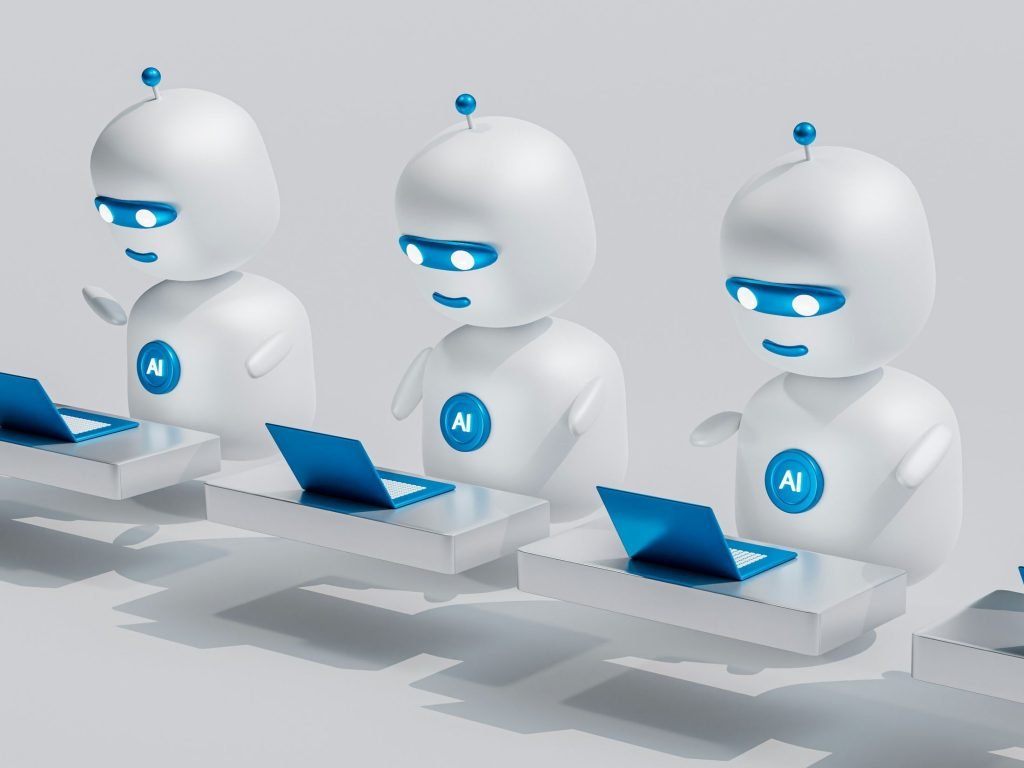
Multi-agent AI systems are reshaping supply chain execution as global enterprises move beyond static dashboards and predictive recommendations toward autonomous logistics operations.
For years, supply chain teams have relied on analytics platforms and predictive demand models to identify potential disruptions. However, the final decision has typically remained with human planners.
The emergence of multi-agent AI is changing that workflow.
Instead of simply recommending an action, specialised AI agents can monitor real-time operational data, evaluate changing conditions, and execute predefined decisions within controlled boundaries.
These systems can process information from carrier estimated arrival times, warehouse management systems (WMS), yard cameras, inventory platforms, transportation networks, and enterprise resource planning (ERP) software.
Applications include freight rerouting, inventory rebalancing, dock allocation, disruption detection, and supplier communication.
From Predictive Analytics to Autonomous Supply Chain Execution
Traditional supply chain analytics primarily answers questions such as what is happening, what could happen, and what planners should consider doing next.
Agentic AI for supply chains introduces another layer: taking action.
Multi-agent architectures divide complex supply chain processes among specialised software agents. Each agent can focus on a particular operational function while communicating with other agents through a broader orchestration layer.
For example, one agent may monitor transportation disruptions while another manages inventory exposure. A third agent can evaluate warehouse capacity, while a supervisory agent coordinates the resulting decisions.
This architecture allows supply chain organisations to respond to operational changes continuously rather than waiting for scheduled planning cycles.
Lenovo Demonstrates Multi-Agent Supply Chain Automation
Lenovo has reported an example of this transition through its global iChain infrastructure, spanning 180 markets, more than 30 factories, and 100 logistics centres.
The technology company connected an Order Fulfilment Agent and a Risk Management Agent with existing transaction platforms.
According to Lenovo, fulfilment decisions were processed three times faster, disruption response improved by four times, and risk assessment reached 85% accuracy. The company also reported a 30% improvement in delivery accuracy.
The deployment illustrates how multi-agent AI can operate as an execution layer on top of established enterprise supply chain infrastructure rather than requiring organisations to completely replace existing systems.
Multi-Agent AI Targets Complex Supplier Networks
The technology is also being applied to supplier management and manufacturing networks.
A mid-sized automotive parts manufacturer documented by Simor Consulting deployed five specialised AI agents across 15 countries and approximately 200 suppliers during an 18-month production period.
The company reported that on-time delivery improved from 82% to 94%.
One disruption-focused agent reportedly identified supply risks approximately 48 hours earlier than manual monitoring teams.
Supplier communication also became part of the automated workflow. While the system initially encountered difficulties communicating with unfamiliar suppliers, its performance improved after it learned the response patterns associated with individual vendors.
The example highlights both the potential and limitations of autonomous supply chain AI: agents can operate across large networks, but effective automation still depends on reliable data, established interaction patterns, and clearly defined operating boundaries.
AI Agents Coordinate Transportation Networks
Multi-agent AI is also moving into transportation optimisation and inter-enterprise logistics.
Fujitsu and Rohto Pharmaceutical conducted an initial virtual-network experiment that reportedly achieved transportation cost reductions of up to 30%.
The companies subsequently planned a larger trial involving Rohto’s physical supply chain from January 2026 through March 2027.
Such systems can potentially coordinate transportation decisions across multiple organisations instead of optimising individual logistics functions in isolation.
That distinction is important because modern supply chains involve interconnected decisions. A change to one shipment can affect warehouse capacity, inventory availability, production schedules, labour requirements, and downstream deliveries.
Multi-agent architectures are designed to manage these relationships through multiple specialised decision-making systems.
Industrial Companies Build Multi-Agent AI Layers
Industrial manufacturers are also developing broader AI orchestration frameworks.
Kohler has implemented a supervisory agent designed to coordinate demand, inventory, and planning functions. Meanwhile, Belden has developed a multi-level supplier graph supported by task-specific agents.
Belden’s architecture is designed to respond to transportation disruptions and address master-data issues, with autonomous execution identified as a later stage of development.
These approaches demonstrate a growing industry pattern: companies are not necessarily replacing their existing ERP, WMS, or transportation management systems.
Instead, AI agents are being positioned above existing enterprise applications as an intelligent execution layer.
Supply Chain AI Requires Strict Operational Guardrails
Autonomous execution also introduces significant operational risks.
When AI agents have permission to directly modify purchasing, inventory, transportation, or shipping systems, a single incorrect decision can propagate across multiple connected processes.
For this reason, organisations deploying autonomous supply chain AI need clearly defined financial, operational, and compliance boundaries.
Common safeguards can include:
- Transportation controls: Rerouting agents operate within predefined cost limits and acceptable service-level deviations.
- Inventory controls: Adjustments exceeding specific financial or volume thresholds require human approval.
- Supplier communication controls: Agents remain in draft mode when interacting with unfamiliar or unverified suppliers until performance reaches established benchmarks.
- Transaction controls: High-impact ERP and procurement changes require additional validation before execution.
- Escalation rules: Agents automatically transfer decisions to human planners when conditions exceed predefined parameters.
The objective is not necessarily to eliminate human planners. Instead, companies can use supervised autonomy, allowing AI agents to execute routine decisions while escalating unusual or high-risk scenarios.
AI-Powered Warehouses Move Toward Autonomous Execution
Warehouse automation represents another major testing ground for multi-agent AI.
Research involving the Massachusetts Institute of Technology (MIT) and Symbotic demonstrated a 25% throughput improvement in simulated e-commerce distribution facilities through coordinated multi-robot path planning.
NVIDIA has also introduced a Multi-Agent Intelligent Warehouse reference architecture focused on coordinating planning across robotic fleets.
However, autonomous physical execution remains more constrained than software-based supply chain decision-making.
Many production environments continue to separate robotic movement from autonomous financial and transactional decisions. This creates an additional safety layer between AI-based optimisation and physical warehouse operations.
The Next Stage of Agentic Supply Chain Technology
The development of multi-agent AI for supply chains signals a shift from recommendation-based analytics toward continuous operational execution.
Instead of asking an AI system what planners should do, organisations are increasingly exploring architectures where specialised agents can monitor events, coordinate with other agents, make bounded decisions, and execute approved actions.
The biggest challenge is therefore no longer simply building intelligent AI models. It is establishing the data infrastructure, system integrations, governance frameworks, financial limits, and human escalation mechanisms required to operate those models safely.
Rohto Pharmaceutical’s planned live-chain trial through March 2027 could provide another real-world test of how multi-agent AI performs when autonomous decision loops move beyond simulation and into physical supply chain operations.
As these deployments expand, the supply chain technology stack is evolving from dashboards and predictive analytics toward agentic AI systems capable of continuously sensing, deciding, coordinating, and executing logistics operations.