
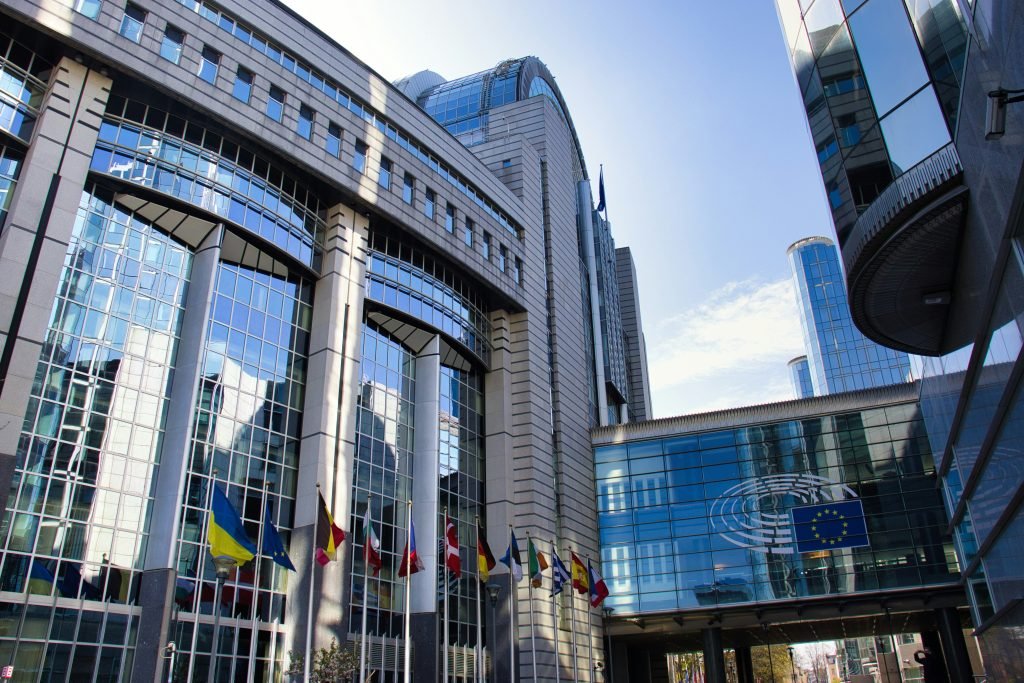
Artificial intelligence is advancing rapidly, raising critical questions about human rights, democracy, and the future of digital governance. In response to these challenges, Microsoft and the Council of Europe have signed a cooperation agreement aimed at encouraging responsible AI development while protecting the fundamental values that underpin democratic societies.
The memorandum of understanding (MoU) establishes a framework for potential collaboration between the international organisation and the technology giant. Its central focus is to explore how innovation can progress without compromising human rights, the rule of law, or inclusive access to technology.
The agreement was signed at the Council of Europe’s headquarters in Strasbourg, France, by Secretary General Alain Berset and Microsoft Vice Chair and President Brad Smith.
For both organisations, the partnership reflects a growing recognition that the future of artificial intelligence will depend not only on technological breakthroughs but also on the principles guiding its development and use.
Why Responsible AI Has Become a Global Priority
As AI systems become increasingly integrated into business, public services, and everyday life, questions surrounding accountability, digital rights, and democratic safeguards are becoming more pressing.
Alain Berset emphasised that artificial intelligence is emerging at a time when international cooperation and shared legal principles face significant challenges. He argued that technological progress is moving faster than many democratic safeguards can adapt.
Berset also highlighted the importance of working with private-sector companies to address these challenges, noting that collaboration with Microsoft could help make technological transformation more responsible.
The agreement provides a foundation for exploring practical ways to connect AI innovation with human rights protection, democratic principles, and the rule of law.
Importantly, the memorandum does not commit either organisation to a defined set of new AI products or deployments. Instead, it creates a framework for future initiatives that both parties may agree to pursue.
Microsoft AI Partnership Targets Inclusive Digital Innovation
One potential area of collaboration involves Microsoft’s Open Innovation Centre in Strasbourg, which could provide a setting for dialogue, knowledge sharing, and the exchange of good practices.
The organisations may explore approaches to responsible technology development that make digital innovation more inclusive and responsive to society’s needs.
Linguistic and cultural diversity is another priority identified in the agreement. Potential initiatives could support regional and minority languages, helping address the risk that communities with fewer digital resources may be overlooked as AI technology evolves.
Such cooperation could contribute to a more inclusive digital environment in which technological development recognises the diversity of languages and cultures across Europe.
Brad Smith stressed that AI’s long-term value should be judged by how effectively it serves people.
According to Smith, the partnership aims to keep innovation grounded in human rights, democracy, and the rule of law.
His remarks underline a central challenge facing the technology industry: ensuring that the benefits of artificial intelligence are accompanied by meaningful safeguards and a clear commitment to public interest.
AI for Good Lab Supports Ukraine Damage Assessment
The new memorandum also builds on existing cooperation between Microsoft and the Council of Europe, including the Register of Damage for Ukraine.
Microsoft’s AI for Good Lab already supports damage assessment work connected to the project. This initiative contributes to documenting damage resulting from Russia’s war against Ukraine.
The collaboration illustrates how AI capabilities can be applied beyond commercial applications, potentially supporting documentation, analysis, and other public-interest activities.
By developing their existing relationship, the two organisations have an opportunity to explore further areas where technology and international institutional expertise can work together to address complex challenges.
However, the new agreement does not specify additional deployments or guarantee that further projects will proceed.
Building on Cybercrime Prevention and Digital Security
Cooperation between Microsoft and the Council of Europe extends beyond artificial intelligence.
Microsoft has previously supported the Council of Europe’s Budapest Convention on Cybercrime through initiatives such as the Global Project on Cybercrime and the Cybercrime Octopus project.
These programmes help countries implement the convention while strengthening approaches to cybercrime prevention, data protection, and the rule of law.
This background provides an established basis for dialogue on emerging digital challenges, particularly as governments seek to balance effective cybersecurity measures with fundamental rights and legal safeguards.
The organisations’ broader cooperation reflects the connection between responsible technology development, digital security, and international standards.
What the Microsoft–Council of Europe Agreement Means for AI’s Future
The agreement highlights an important shift in the global AI conversation: technological innovation is increasingly being discussed alongside questions of governance, accountability, and human rights.
For Microsoft, the partnership creates a framework for engaging with an international institution focused on democracy, legal standards, and fundamental freedoms. For the Council of Europe, it offers an opportunity to explore cooperation with a major technology company on issues affecting the digital environment.
The immediate outcome is a framework for dialogue and potential joint initiatives, rather than the launch of a new AI platform or a binding commitment to specific technology projects.
Future activities will depend on mutual agreement and the respective mandates of both organisations.
As AI continues to reshape society, the challenge will be to translate principles such as transparency, inclusion, and respect for human rights into practical approaches to technology development.
The Microsoft–Council of Europe partnership creates a new opportunity to explore that challenge, placing responsible innovation and democratic values at the centre of the discussion.