
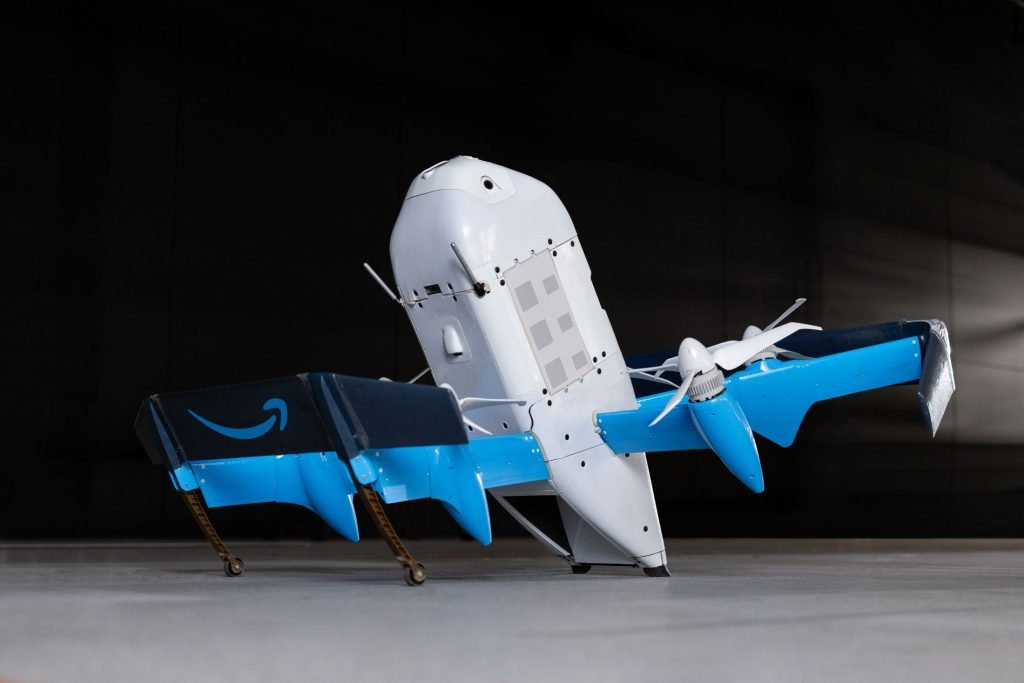
Amazon is preparing for a major expansion of its autonomous Prime Air drone delivery network, with plans to bring the service to nearly 500 cities and towns across the United States by the end of 2026. The expansion would increase Prime Air’s current reach by roughly six times and potentially make autonomous drone delivery available to tens of millions of additional customers.
The scale of the planned rollout depends heavily on the drones’ ability to operate independently. Rather than requiring a pilot or remote employee to supervise every aircraft throughout its journey, Prime Air uses highly autonomous flight technology designed to manage navigation, identify potential hazards, and respond to unexpected situations.
Autonomous Technology at the Heart of Prime Air
A key component of Amazon’s drone system is its Detect-and-Avoid technology. The system constantly evaluates the airspace surrounding the aircraft, allowing the drone to identify obstacles and make flight adjustments without requiring intervention from a human operator.
Cameras and onboard sensors are responsible for several critical functions, including navigation, obstacle detection, and identifying the appropriate location for package delivery.
Amazon says the cameras are designed for the drone’s navigation and safety functions rather than surveillance. According to the company, the aircraft do not follow individuals or record their movements, while camera information is processed by the drone itself instead of being transmitted as a live video feed to a remote control centre.
FAA Certification Enables Wider Deployment
Prime Air operates under Federal Aviation Administration Part 135 certification, the regulatory framework used for commercial air carriers. Amazon describes the certification as the highest level of FAA approval currently available to a drone delivery operation.
This certification is particularly important as Amazon expands into new markets because it allows the company to establish operations in additional metropolitan areas without having to rely on a separate exemption for every location.
Safety remains a central element of the system. Amazon says its drones are equipped with technology capable of responding to serious weather conditions and other unexpected circumstances by guiding the aircraft toward a safe landing area.
The drones are also designed for everyday operating conditions, including light rain and varying temperatures. Because the aircraft are fully electric, they produce no direct exhaust emissions during operation.
Designed for Residential Neighbourhoods
Noise is another consideration as Amazon attempts to integrate drone delivery into suburban communities.
During package delivery, Amazon says its drones produce less sound than an idling delivery truck and remain in the area for approximately 30 seconds. Once the aircraft reaches cruising altitude, the company compares its sound to a window fan operating on a low setting, which it says is generally difficult to hear from inside a home.
What Can Customers Order?
Prime Air is intended for relatively small packages. The drones can transport products weighing up to five pounds, or approximately 2.27 kilograms, provided the items fit within the aircraft’s delivery container.
Amazon estimates that this weight restriction covers more than 60% of the products customers frequently purchase on its platform.
The selection includes millions of eligible products sold at Amazon’s standard prices. Customers can potentially order groceries, cosmetics, medicines, electronics, and other everyday products.
Examples cited by Amazon include iPhones, Samsung Galaxy smartphones, Apple AirTags, AirPods, Ring doorbells, and various household products.
The service is designed around speed. Some deliveries can arrive in as little as 30 minutes, while Amazon says the typical delivery time is closer to one hour following checkout.
Pricing depends on the customer’s Prime membership and order value. Prime members receive free drone delivery for qualifying orders of $50 or more, while smaller Prime orders carry a $2.99 fee. Customers without Prime pay $4.99 for drone delivery regardless of their order size.
Customers Can Select a Delivery Location
New Prime Air users choose a suitable delivery location when placing their first drone order. The selected location can be reused for future purchases or changed when necessary.
Before releasing a package, the drone evaluates the designated landing or drop-off area. The system checks for people, pets, vehicles, or other obstacles that could make the delivery unsafe.
This automated safety check is another example of how Amazon is attempting to reduce the need for human intervention during the final stage of delivery.
Prime Air Is Part of a Larger Delivery Network
Amazon does not view drone delivery as a replacement for its existing logistics infrastructure. Instead, Prime Air is positioned as another layer within the company’s increasingly diversified delivery network.
Amazon Now, for example, provides delivery in as little as 30 minutes in dozens of US cities, offering thousands of grocery, household, and locally relevant products from smaller fulfilment locations.
The company’s Same-Day Delivery network provides one-hour and three-hour delivery for selected products, with more than 90,000 items available through parts of the network. Broader Same-Day Delivery coverage extends to millions of products across more than 10,000 cities and towns.
Prime Air is therefore primarily aimed at suburban communities, where drones can operate from dedicated Amazon facilities while complementing faster delivery services in densely populated urban markets.
Prime Air’s Current US Footprint
Amazon currently operates 11 Prime Air sites across 10 metropolitan areas in seven US states.
The network includes a facility in Tolleson, Arizona, serving the Phoenix area, and another in Ruskin, Florida, near Tampa. Kansas City and Baton Rouge each have one site, while Michigan has two facilities in Hazel Park and Pontiac serving the Detroit region.
Nebraska’s operation is based in Papillion near Omaha. Texas has four Prime Air locations, including Richmond near Houston, Richardson near Dallas, San Antonio, and Waco.
Each Prime Air site serves an area covering approximately 175 square miles.
Amazon says its Prime Air locations currently achieve some of the highest average delivery volumes among drone delivery operations in the United States. The company reports thousands of drone deliveries each day and says hundreds of thousands of packages have already been delivered by drone during 2026.
New Markets Are Coming
Amazon plans to introduce Prime Air to additional metropolitan areas, including Chicago, Syracuse, Cleveland, Atlanta, and Boise. More communities are expected to be added as the company continues its rollout.
However, availability will depend on individual ZIP codes and addresses. Amazon notes that being located within a ZIP code listed for Prime Air does not necessarily mean every address will qualify for drone delivery.
The company is effectively building the infrastructure for a much broader autonomous delivery network while continuing to refine where and how drones can safely operate in residential areas.
Prime Air Expands Beyond the United States
Amazon’s drone ambitions are no longer limited to the US. The company has also established a Prime Air facility in Darlington, United Kingdom, marking the first Prime Air site outside the United States.
The UK operation provides Amazon with an opportunity to deploy its autonomous flight technology and Detect-and-Avoid systems under a different aviation regulatory framework.
If Amazon achieves its goal of reaching nearly 500 US cities and towns by the end of 2026, Prime Air could become one of the world’s largest commercial autonomous drone delivery networks. The expansion demonstrates Amazon’s broader strategy of combining robotics, artificial intelligence, electric aircraft, and automated logistics to make ultra-fast delivery increasingly accessible.
Kalau Anda mau, saya juga bisa membuat versi ini dalam bahasa Inggris yang lebih SEO-friendly untuk Google News, atau versi 600–800 kata dengan keyword seperti “Amazon drone delivery”, “Prime Air”, “autonomous delivery drones”, dan “drone delivery 2026”.